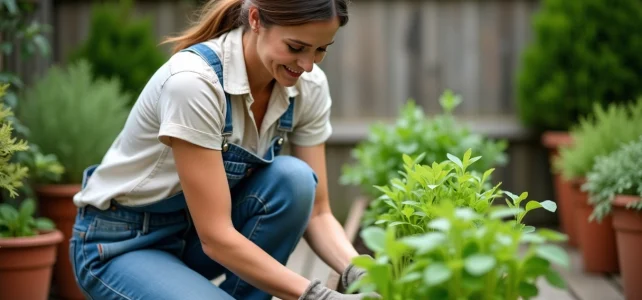
Some aromatic plants thrive better in partial shade than in full sun, contrary to what most gardening guides claim. Traditional sowing calendars, often based on national averages, overlook the microclimates that can make or break a garden.
Using recycled containers to grow medicinal herbs limits pest proliferation while reducing the ecological footprint. Rotating aromatic species, usually reserved for large-scale farming, proves just as relevant in a small space and enhances the vitality of the plants.
You may also like : Tips and Inspirations for Designing the Pool of Your Dreams at Home
Imagining a garden corner dedicated to herbs and herbal teas: why and how to go about it?
Creating a gardening space dedicated to aromatic herbs and herbal plants is like setting up a small botanical laboratory at your fingertips. Rosemary, mint, or verbena do more than brighten a corner; they provide a reserve of scents, colors, and benefits. For a garden or an indoor vegetable patch, it’s best to choose species based on the available light, the layout of the space, and how often you use them in your daily life.
Optimizing a garden space starts with observation and experimentation. A simple windowsill, a balcony, a raised bed, or a few pots are enough to get started. Plant associations make a difference: chives protect basil, sage energizes thyme. By segmenting the herb corner into small plots, you maintain control over growth and harvest. Detailed advice on lejardindemilie.fr provides concrete ideas for turning a small corner into a true vegetal haven.
See also : Ideas and Inspirations for a Cozy Breton Home
The indoor vegetable garden quickly takes on the appearance of a curiosity cabinet. Choosing suitable containers and a well-draining substrate gives you the best chance of success. Let yourself be tempted: sow, take cuttings, and test new varieties according to the season. A mobile app to track your crops makes daily management more flexible: watering, monitoring, and harvesting can be scheduled with just a few taps. Gardening then becomes part of the routine, shared and evolving over time.
What choices for an ecological and harmonious layout?
Nothing is left to chance in the construction of a garden haven: every choice shapes the overall balance. Focusing on plants suited to the local climate, tolerant of variations, and water-efficient allows the garden to thrive without unnecessary effort. To design an aesthetic and functional garden, it’s wise to diversify the vegetation: evergreen foliage, wildflowers, climbers that define the space.
Prioritizing natural materials creates a sober and sustainable unity: raw wood, local stone, organic mulch. On the terrace or in the ground, the furniture almost disappears into the decor, creating a true continuity between the living space and the vegetation. Placing a discreet compost, installing a rainwater collector, or choosing water-saving irrigation methods like drip systems or oyas enhances the ecological aspect.
Here are some concrete ideas to strengthen the balance of the garden:
- Select pollinator-friendly plants: they attract pollinators and butterflies, supporting the biodiversity of the immediate environment.
- Explore permaculture or crop rotation: each plant finds its role, each season renews interactions.
- Try xeroscaping where the sun is intense: reduce watering, let nature adapt.
If you want to create a space that makes sense for children, it’s better to plan winding paths, touch zones, and a few plant hideaways. A garden designed this way becomes a playground, where living beings and humans coexist without domination or constraint.

Concrete tips for growing, harvesting, and enjoying your plants throughout the seasons
The garden cycle is in motion all year round. As soon as the first nice days arrive, sow seeds in tight rows on a nutrient-rich substrate, ensuring to maintain consistent moisture. An organic mulch helps keep the soil cool and limits the growth of unwanted weeds. Watering, precise and timely, is preferably done at the base of the plants, early in the morning or in the evening. Drip systems or oyas help use water wisely.
Humidity or temperature sensors are useful for measuring inputs: adjust watering to the actual needs of the soil. A handful of homemade compost, added in spring or autumn, revitalizes without excess. The green waste from garden maintenance feeds the compost and closes the natural loop.
Diversity is key: alternate lettuces, radishes, tomatoes, and herbs. Practicing crop rotation maintains fertility and prevents diseases. LED lights are valuable for supporting the growth of young shoots indoors, especially during the shortest days.
Harvest according to maturity. The tenderness of young leaves, the intensity of freshly cut rosemary, the crunch of the first carrots: each season brings its share of renewed pleasures. Between precise actions and sensory discoveries, the garden becomes a daily companion, ready to surprise those who remain attentive to its cycles.