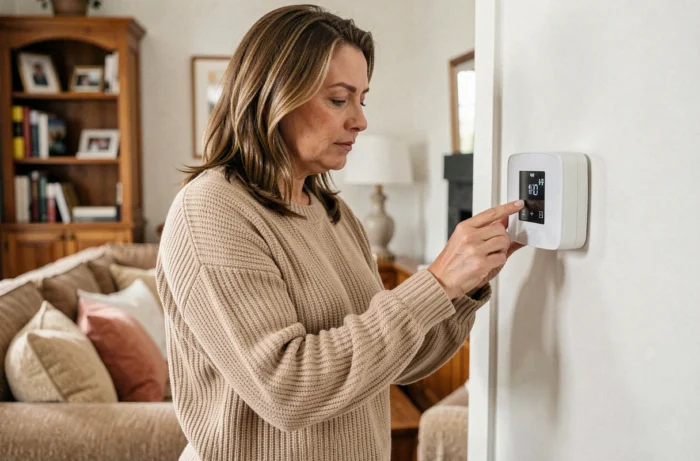
Heating accounts for the largest share of a household’s energy costs. Repeated increases in gas and electricity prices are prompting many households to look for ways to reduce their heating bills, but the solutions available online are often limited to a list of everyday tips.
The real opportunity for lasting savings lies elsewhere: in a rigorous comparison of the total cost of replacing heating equipment with the cost of improving the building envelope.
Total cost of replacing a heating system versus insulation work
Comparing quotes for two boilers or heat pumps based on their rated efficiency is not enough. The efficiency stated by the manufacturer does not reflect actual energy use once the appliance is installed in a poorly insulated home, exposed to wind or occupied irregularly.
To assess the total cost of replacing a heating system, you need to add up several expenses that online comparison tools rarely account for:
- Installation costs, including removal of the old system, connections and any modifications to the plumbing or electrical network.
- The annual maintenance contract, whose price varies by technology (an air-to-water heat pump requires different maintenance from a gas condensing boiler).
- The associated energy contract: switching from gas to electricity changes the tariff structure, the standing charge and your exposure to future regulated price increases.
- Available grants and incentives (MaPrimeRénov’, energy savings certificates), checking whether they can be combined, as some schemes do not cover the same work.
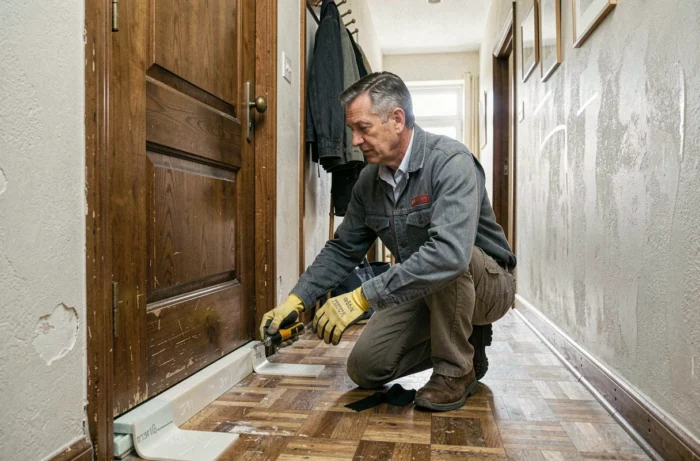
By contrast, improving insulation (lofts, walls, windows) reduces heating demand regardless of the system in place. Insulation addresses the cause of heat loss, not the need to compensate for it. A home with an efficient thermal envelope uses less energy with any system, including a basic electric radiator.
The resources published on the Chauffage Économique website help you compare these factors for a detached home, taking the type of house and climate zone into account.
Replacing a gas boiler with electric heating: savings are not guaranteed
The idea that switching from gas to electricity will automatically lower your bill is widespread. The reality is more nuanced. In France, the price per kilowatt-hour of electricity remains higher than that of gas for direct heating. Replacing a gas boiler with electric radiators without improving insulation often means paying more for the same level of comfort.
A heat pump changes the equation because it uses less electricity than the amount of heat it delivers. Its coefficient of performance depends on the outdoor temperature and the quality of the installation. In a poorly insulated home, operating cycles become longer and the actual savings diminish.
Before choosing new equipment, it is worth checking the terms of your current energy contract. A fixed-price gas contract can offer temporary protection against price increases, while switching to electricity on the regulated tariff leaves you exposed to adjustments every six months. The type of energy contract can affect the actual impact of changing your heating system.
Energy renovation grants: what is still available
In recent years, the range of grants has been narrowed and redirected towards decarbonising heating. MaPrimeRénov’ now prioritises whole-home renovations and supported renovation pathways, making it harder to access funding for a single measure such as replacing a window or insulating just one gable wall.
However, work excluded from the single-measure pathway may still qualify for energy savings certificates (CEE), a scheme funded by energy suppliers. CEE grant amounts vary depending on the provider, the type of work and the geographical area. Comparing several offers before signing a quote is the only way to avoid missing out on savings.
For owners of detached homes on lower incomes, bundled offers combine equipment installation, financing for the remaining costs, a maintenance contract and electricity supply at a fixed price. These offers cannot be combined with MaPrimeRénov’ for the same work, so it is important to calculate which option offers the best value before committing.

Heating bills: the trade-offs that lists of tips leave out
Turning the thermostat down by one degree, bleeding radiators and closing the shutters at night: these tips appear in every guide and have a measurable effect. According to ADEME, lowering the set temperature by one degree reduces energy consumption by several per cent. The issue is not whether these measures work, but how much they can achieve.
In a home where heat escapes through the walls and roof, these adjustments offset some of the losses without eliminating them. Beyond a certain point, turning down the thermostat reduces comfort without significantly lowering the bill. The right balance depends on the existing insulation, the building’s exposure and the number of occupants.
Address heat-loss areas before replacing equipment
A thermal assessment (or an energy audit, which is mandatory for certain property sales) identifies weak points in the building envelope. The roof generally accounts for the largest share of heat loss, followed by the walls and windows. Tackling the worst-performing area first delivers a faster return on investment than replacing a boiler in an uninsulated building.
This whole-life-cost approach, rather than focusing on individual efficiency ratings, changes the order of priorities. A homeowner choosing between a heat pump and insulating an unconverted loft would be wise to cost out both scenarios over ten years, factoring in maintenance costs, available grants and the expected evolution of energy prices.
Heating bills cannot be reduced sustainably with one dramatic measure. They come down when every euro invested targets the right area, in the right order, with a medium-term view of the true cost of each option.