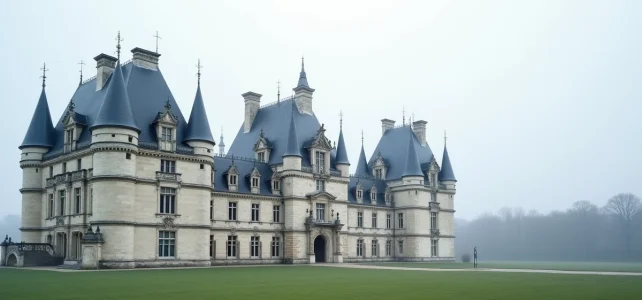
Chambord is not a castle that one inhabits. It is a castle that one showcases. François I stayed there for barely a few weeks in total, but he mobilized thousands of workers for over two decades to build it. Understanding the value of the Château de Chambord means accepting this foundational contradiction: a building designed not for comfort, but for the effect it produces on those who discover it.
A legal status that changes everything for the management of the estate
Chambord is not managed like most historical monuments in France. The estate is managed by a public establishment with an industrial and commercial character (EPIC), placed under dual supervision: the Ministry of Culture and the Ministry of Ecological Transition.
Read also : Discover the origin and meaning of the name Zalando: history and anecdotes
Why does this distinction matter? Because an EPIC has a much greater management autonomy than a monument managed directly by the state. Chambord can form private partnerships, set its own pricing policy, exploit its forest, and organize commercial events.
In concrete terms, the estate’s own resources (filming, space rentals, sponsorship) now represent a significant part of its operating budget. This ability to generate “commercial” revenue gives the castle a rare financial autonomy for a public monument. To delve deeper into the value and history of the Château de Chambord, this economic dimension is as revealing as the architecture itself.
You may also like : Discover the latest trends and news in the world of online sports
Renaissance Architecture of Chambord: the Greek cross plan
The castle is based on a centered plan, known as the Greek cross, inscribed within a rectangular keep. Four round towers occupy the corners. This layout is not medieval: it directly borrows from Italian architectural research of the Quattrocento.
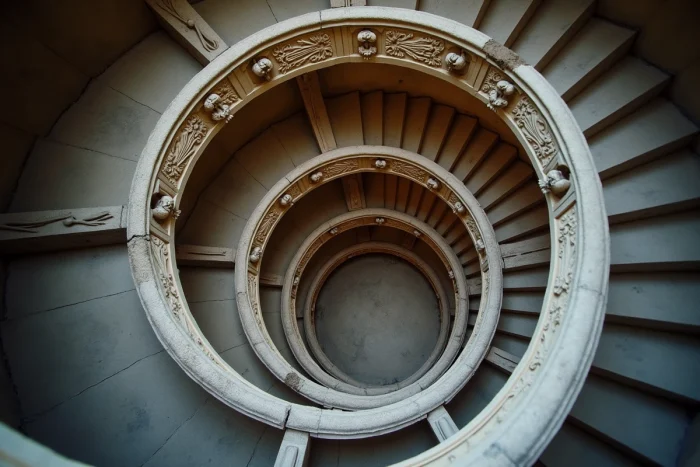
At the center of this cross lies the most famous element of the castle: the double helix staircase. Two helical ramps spiral around a hollow core, allowing two people to ascend and descend simultaneously without ever crossing paths. The influence of Leonardo da Vinci on this design is frequently mentioned, although his direct role remains debated by historians.
What the roof reveals about the project’s ambition
The upper terraces are often an underestimated aspect. François I envisioned them as a place for walking and observation, a balcony overlooking the forested estate. The profusion of turrets, chimneys, and ornate dormers creates a silhouette recognizable above all.
This stone forest atop the castle is not decorative by accident. It served to impress foreign ambassadors and sovereigns invited to contemplate the power of the King of France. The entire castle functions as a diplomatic tool, not as a residence.
- The central keep and its four corner towers structure the whole according to a rigorous symmetry inherited from Italian architecture.
- The double helix staircase, likely inspired by Vinci’s drawings, remains the most commented technical innovation of the castle.
- The rooftop terraces offer a complete panorama of the estate and served as both a political stage and a promenade.
The Chambord estate: much more than a castle and its gardens
Have you ever noticed that articles about Chambord almost exclusively talk about the building? The estate surrounding it is, however, one of the largest enclosed spaces in Europe. A perimeter wall several dozen kilometers long delineates a forest, heathlands, ponds, and agricultural land.
This forested estate is not just a simple landscape setting. It is actively managed, with timber exploitation and wildlife management. Hunting has been practiced there for centuries, first by kings, then by presidents of the Republic. Hunting activities are now regulated with an ecological management objective.
The restored French gardens
The gardens located in front of the north facade have been replanted according to 18th-century plans. This restoration, carried out during the 2010s, has restored the castle’s original landscape setting. Boxwood beds, straight paths, and floral embroideries provide a geometric counterpoint to the surrounding forest.
The coexistence of ordered gardens and wild forest aptly summarizes the duality of Chambord: a place of absolute mastery set amidst a natural space.
Chambord during World War II: national art depot
Between 1939 and 1945, Chambord played a role that few visitors know about. The castle served as a depot for major collections from French museums, including works from the Louvre. The Mona Lisa herself passed through there.
This choice was not incidental. The geographical remoteness of Chambord from combat zones, the strength of its walls, and the vastness of its rooms made it a logical refuge to protect French artistic heritage from bombings and looting.
The estate even refers to this period with a revealing phrase: “Save a little of the beauty of the World.” This episode reinforced the symbolic status of Chambord, which is no longer just a royal castle but a guardian of French cultural heritage in times of crisis.
Chambord listed as a UNESCO World Heritage site: Loire and Renaissance
Chambord has been part of the UNESCO World Heritage listing of the Loire Valley since 2000. This recognition does not only pertain to the castle but to the entire cultural landscape of the Loire, from châteaux to vineyards to historic towns.
For the estate, this listing implies strict conservation constraints and increased international visibility. The castle attracts a considerable number of visitors from around the world each year, which directly feeds its own revenue and self-financing capacity.
- The UNESCO listing covers the entire Loire Valley, not just Chambord, which enhances the tourist coherence of the region.
- The conservation obligations related to the listing govern any intervention on the built environment and the natural estate.
- International visitation supports the economic model of the EPIC, partly based on ticketing and private event revenues.
Chambord embodies paradoxes: a royal castle where the king hardly lived, a public monument that operates like a business, a Renaissance jewel that protected 20th-century art. Its value is not limited to a market price or built area. It lies in this ability, intact for five centuries, to evoke wonder.