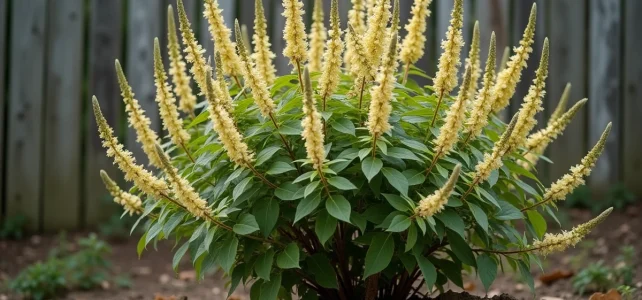
The Buddleja davidii typically blooms from mid-summer until the first frosts. When a butterfly bush fails to produce any clusters, the instinct is to look for watering or pruning issues. These two avenues are often the first mentioned in gardening guides. However, they only cover part of the diagnosis, and several less visible causes deserve close examination.
Late frost and early budding of the buddleia
Episodes of late frost in spring, occurring after budding, are an increasingly documented cause of non-blooming. Horticultural alerts indicate that burned or aborted flower buds after an early thaw particularly affect Buddleja davidii in Eastern France and in certain continental climate areas in Canada.
Recommended read : Everything You Need to Know to Succeed in Real Estate Investment and Manage Your Wealth Well
The mechanism is simple: a thaw in March prompts the shrub to bud, then a night of frost destroys the tender tissues. The plant survives, produces foliage, but does not form flower spikes for the season. This phenomenon is distinct from classic winter frost, against which the buddleia withstands well.
A case of non-blooming butterfly bush in USDA zones 7 or 8, after an unstable spring, often points to this scenario. The only lever is to delay late winter pruning: by not cutting back before mid-March (or even early April depending on the region), dormant buds are kept a little longer and the risk of frost exposure is reduced.
Further reading : Everything you need to know to understand and care for your cat daily
Alkaline soil and urban gardens: an underestimated factor
The Buddleja davidii tolerates a wide range of soils, but there is a limit. Soil diagnostics conducted by agricultural chambers and analysis laboratories reveal an increasing frequency of highly alkaline artificial soils in recent urban gardens. The addition of rubble, mortar, and construction debris alters the pH well beyond what the shrub can tolerate without affecting its blooming.
In soil where the pH significantly exceeds neutrality, the absorption of iron and manganese drops. The foliage may yellow between the veins (iron chlorosis), and the plant directs its energy towards survival rather than flower production. This diagnosis remains rare in popular guides, which merely recommend “well-drained soil.”
How to check your soil’s pH
- A pH test kit sold at garden centers provides a reliable first indication in just a few minutes. Simply take soil from the base of the shrub, about ten centimeters deep.
- If the result significantly exceeds neutrality and signs of chlorosis appear, an acidic amendment (elemental sulfur, blonde peat) can gradually correct the pH over several months.
- If doubts persist, a laboratory soil analysis (offered by some agricultural chambers) provides a complete profile: pH, active lime, organic matter, trace elements.
Before suspecting excess fertilizer or poor watering, testing the soil pH remains the most underused diagnostic gesture by amateur gardeners faced with a buddleia that refuses to bloom.
Dwarf varieties in pots: root limitations that block blooming
Recent breeding programs have produced compact varieties of buddleia, often sold as “perfect for pots” on nursery labels. Field reports vary on this point. Several horticultural trials show that these dwarf varieties bloom significantly less in pots than in the ground, due to limited root volume and more pronounced water stress.
The buddleia naturally develops an extensive and deep root system. In pots, the roots quickly saturate the container, leading to a vicious cycle: the substrate dries out quickly, the plant experiences stress, and it stops producing flower buds.
Recommendations for pot cultivation
Initial technical recommendations from nurserymen are beginning to emerge, even if they are not yet included in most popular guides:
- Repot every year into a slightly larger container, using a very draining substrate but enriched with mature compost.
- Water more regularly than in the ground, ensuring that the substrate never remains dry for more than two centimeters at the surface.
- Place the pot in full sun, with a minimum of six hours of direct sunlight, a non-negotiable condition to trigger blooming.
A dwarf buddleia in an insufficiently sized pot, watered like a ground plant, often produces decent foliage but no flower clusters. Annual repotting radically changes the game for these compact cultivars.
Pruning the buddleia at the wrong time: a schedule to adjust
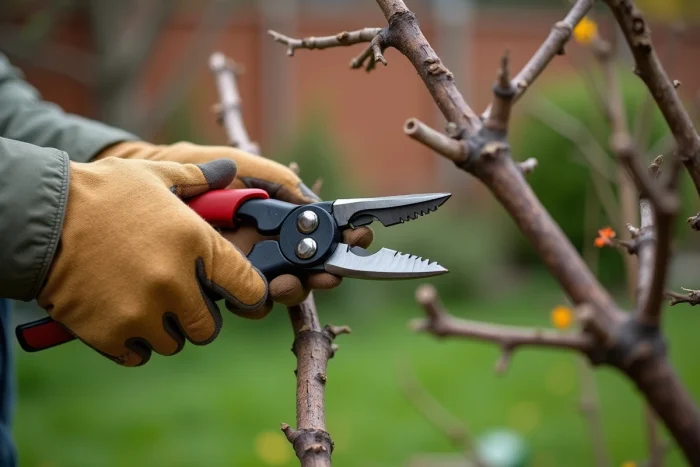
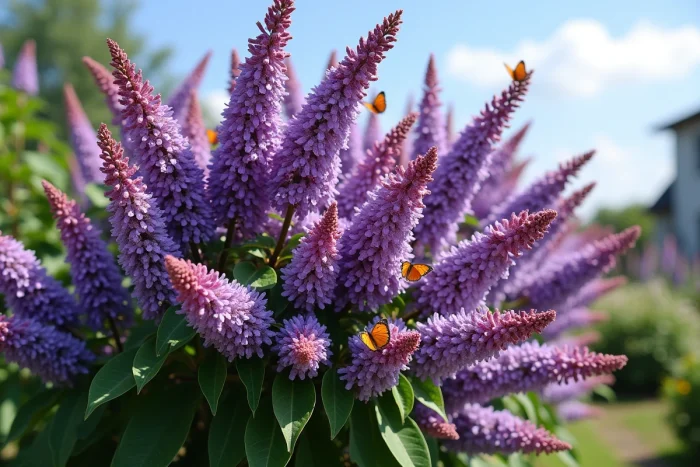
The Buddleja davidii blooms on the wood of the year. Pruning in summer or fall means removing the branches that bear future buds or stimulating late regrowth that frost will destroy. The optimal pruning window is at the end of winter, when the last severe frosts have passed but before active vegetation resumes.
In contrast, spring-flowering buddleia species (like Buddleja alternifolia) bloom on the previous year’s wood. Pruning them at the end of winter removes all blooming. Confusing the two types is a common mistake that explains some cases of total non-blooming.
Identifying the exact species of your buddleia determines the pruning schedule. A Buddleja davidii is cut back short in March. A Buddleja alternifolia is pruned just after its spring bloom. Applying the wrong schedule guarantees a blank season.
The diagnosis of a butterfly bush that does not bloom rarely involves a single cause. Soil too alkaline, late frost on budding buds, container too narrow for a dwarf variety, species confusion at pruning time: each avenue deserves to be checked methodically before altering water or fertilizer inputs, which remain the usual suspects but are not always the culprits.