
The cord bracelet combines three technical parameters that most wrist jewelry does not meet: negligible weight, dimensional adaptability without tools, and compatibility with a wide variety of decorative elements (metal, stone, enamel, engraving). This combination explains its growth in online purchases, driven by “self-gift” orders and friendship gifts.
Cord Materials and Impact on Bracelet Durability
The choice of cord significantly influences the bracelet’s durability more than the central ornament. We observe three dominant fiber families in the current market, each with distinct wear characteristics.
Recommended read : Why Your Butterfly Bush Isn't Blooming: Causes and Solutions to Know
Waxed cotton offers a soft touch and good tensile strength but does not handle prolonged exposure to chlorinated water well. Braided polyester, which is finer, retains its color after several months of daily wear. Coated nylon, often used in models with a sliding silver clasp, tolerates moisture better but may cause slight friction on sensitive skin.
Several brands have incorporated recycled polyester or GOTS certified organic cotton cords into their recent catalogs. Agatha and Les Georgettes, for example, offer upcycled marine cords, responding to the growing demand for textile traceability in the jewelry segment.
Related reading : Complete guide to finding and buying time powder in Dofus Retro
To understand the reasons for the success of cord bracelets, one must look beyond aesthetics and consider these material criteria that consumers now evaluate before purchasing.
- Waxed cotton is suitable for bracelets worn occasionally, during events or in rotation with other jewelry.
- Braided polyester adapts to permanent wear, including under a watch or stacked with another bracelet.
- Coated nylon remains the best compromise for adjustable models with sliding knots, thanks to its low coefficient of friction on itself.
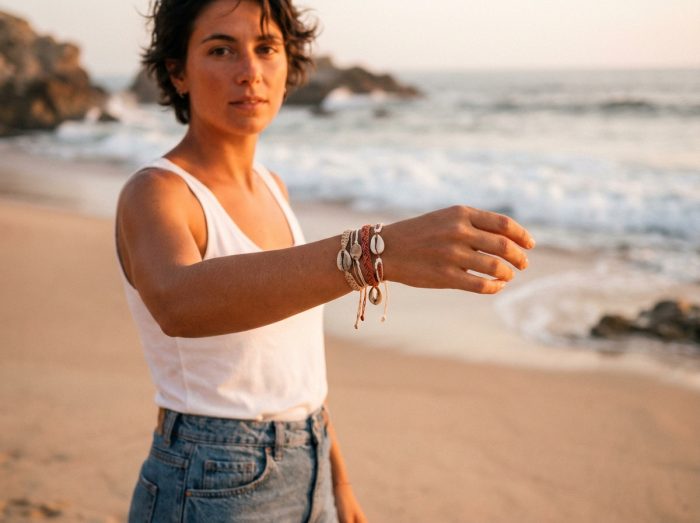
Personalized Cord Bracelet: What Distinguishes a Narrative Jewelry from a Gadget
Personalization is the main lever of perceived value in this segment. A cord alone is worth almost nothing. It is the central element, the engraving or symbol that transforms the object into a narrative jewelry piece carrying a personal story.
Customization platforms have noted a marked increase in orders incorporating initials, astrological signs, or intimate messages. Atelier Paulin, for example, links this success to the need for an object that tells a relationship or a moment in life.
This phenomenon goes beyond mere fashion trends. The cord bracelet functions as a portable identity support. A silver plaque engraved with a birth date, a small gold-plated heart, a colored stone associated with a month: each combination creates a unique model without requiring costly custom manufacturing.
Engraving, Symbol, or Stone: Which Element to Choose
Engraving on a plaque remains the most readable choice. It can support up to ten characters on standard formats. Raised symbols (heart, star, infinity) offer a more discreet appearance but age better visually, as they do not depend on the sharpness of the line.
A natural stone mounted on a cord requires a setting suitable for wrist movement. Closed settings protect the stone better than claw settings, which are too exposed to daily impacts. We recommend checking this point before purchase, especially on low-priced bracelets.
Wrist Comfort: Why Cord Surpasses Rigid Bangles in Daily Use
Lightness and the absence of discomfort on the wrist now weigh as much as style in the purchasing decision. A rigid bangle imposes a fixed diameter. It compresses the wrist in case of water retention, hinders typing, and catches on narrow sleeves. The cord bracelet, with its sliding system, adjusts continuously without intervention. It produces no contact noise on a hard surface, making it compatible with quiet work environments.
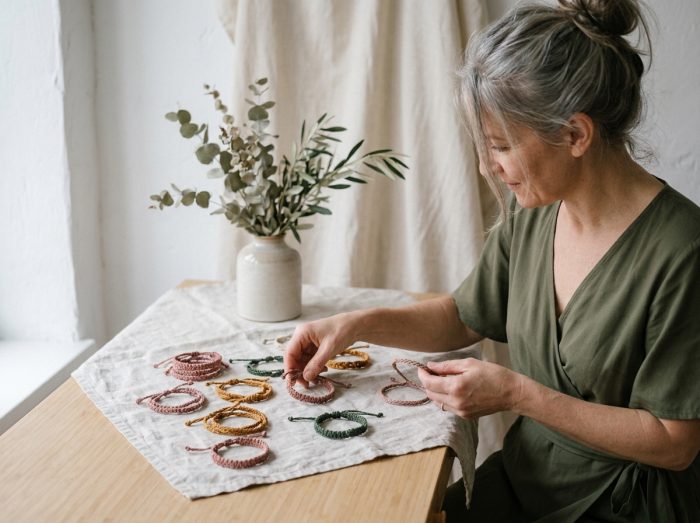
This comfort also explains the success of the cord as a layering jewelry piece. Women stack two or three cord bracelets of different colors without weighing down the wrist. The total mass remains lower than that of a single silver chain bracelet.
Women’s Cord Bracelet: Selection Criteria for a Sustainable Purchase
The very low entry price of this segment (a few euros for a basic model) generates a plethora of options where quality varies significantly. Three technical checks can filter reliable models.
- The sliding knot must withstand a firm pull without slipping. A good macramé knot maintains the adjustment all day, even in hot weather.
- The attachment of the central ornament to the cord should not rely on a simple open ring. Welded rings or tubular loops ensure significantly superior hold.
- The finishing of the cord at the ends (heat-sealed tips or metal caps) prevents fraying, the first visible sign of degradation.
A well-constructed cord bracelet lasts several seasons of regular wear, provided it avoids prolonged contact with chemicals (perfume, sunscreen applied directly to the jewelry). Rinsing the cord with clear water after a day at the beach is enough to preserve the fiber.
Coordinating Colors with Your Existing Collection
The cord offers a color palette inaccessible to metals. A gold or silver bracelet exists only in its native shades. The cord comes in dozens of hues, allowing it to match a specific outfit or create a contrast with a metal watch.
Neutral shades (black, taupe, navy blue) remain the most versatile. Bright colors work as accent pieces on a wrist already adorned with a discreet bracelet. The choice of cord color deserves as much attention as that of the pendant or plaque, as it is the largest visible surface of the jewelry.
The cord bracelet derives its commercial longevity from this convergence of accessible personalization, superior comfort, and contained pricing. Women adopting it in 2026 are not following a passing trend: they are responding to functional criteria that other bracelet formats do not fulfill as well.