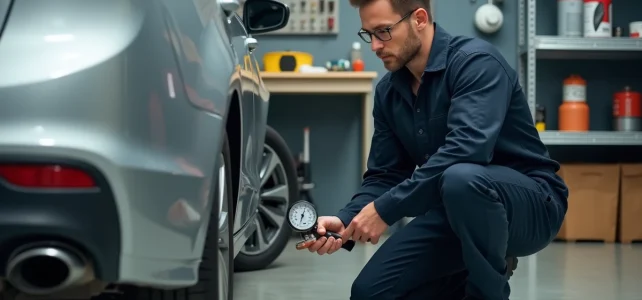
A front tire that has been slowly deflating for three weeks, a motorcycle chain that squeaks at the first wet turn: we often postpone car and motorcycle maintenance until a symptom becomes impossible to ignore. Adapting maintenance practices to actual usage, rather than blindly following a fixed schedule, makes a difference in mechanical longevity and safety.
Predictive motorcycle maintenance: adjusting revisions to actual engine stress
Traditional maintenance schedules (every X kilometers or every Y months) assume that every driver rides the same way. On a motorcycle used in the city with frequent stops, the engine experiences much higher thermal stress than in linear road use, for the same mileage.
Further reading : Tips and Inspiration for Transforming and Maintaining Your Garden Year-Round
Ducati has opened an interesting avenue with its Ducati Corse algorithm, embedded in the Desmo450 MX. The system adjusts maintenance intervals in real-time based on measured engine stress, which can be accessed via the Ducati X-Link app. This shifts maintenance from fixed dates to a customized maintenance based on actual usage.
Even without this type of technology, the same principle can be applied manually. A daily urban commute with traffic justifies shortening engine oil change intervals. Conversely, exclusive highway use often allows for extending certain checks. To delve deeper into this type of reasoning tailored to each profile, the practical sheets available on expert-auto-moto.com detail adjustments by usage type.
Related reading : Investing in Real Estate: Tips and Tricks for Successfully Completing Your Real Estate Project
Motorcycle chain: dry cleaning and biodegradable degreasers

The transmission chain remains the most neglected and costly maintenance item for motorcycles when done incorrectly. The classic reflex is to use a high-pressure water jet at a car wash. The problem: pressurized water seeps into the O-rings and accelerates chain wear instead of protecting it.
Field reports from enduro riders show a notable reduction in chain failures thanks to dry cleaning, using inexpensive multifunction tools that specifically avoid prolonged contact with water. Since 2025, European regulations require solvent-free formulations for chain degreasers, pushing towards biodegradable products compatible with seals.
In practice, here is an effective routine:
- Brush the chain dry with a three-sided brush after every muddy outing, without water or aggressive solvent
- Apply a biodegradable degreaser only when the chain shows visible dirt, then grease immediately afterward
- Check the chain tension every two to three weeks during regular use, following the manufacturer’s prescribed play
- Replace the entire chain kit (sprocket, pinion, chain) rather than just the chain, to avoid premature wear of new parts
Feedback varies on the ideal greasing frequency, with some riders greasing after every outing and others once a week. The reliable criterion remains the visual aspect: a chain that feels dry to the touch should be greased without delay.
Tire pressure and fluid levels: checks that save the engine
On both cars and motorcycles, two checks take less than five minutes and prevent most serious mechanical damage: tire pressure and fluid levels.
Car and motorcycle tire pressure
Under-inflated tires increase fuel consumption, degrade handling, and wear unevenly. On a motorcycle, the impact is even more pronounced because the contact surface with the ground is reduced. Tire pressure should be checked cold, before riding, ideally once a week for daily use.
A small deviation from the recommended pressure alters the vehicle’s behavior. The good reflex is to note the manufacturer’s value on a visible sticker in the garage or under the seat, so you don’t have to look it up every time.
Engine oil, coolant, and brake fluid levels
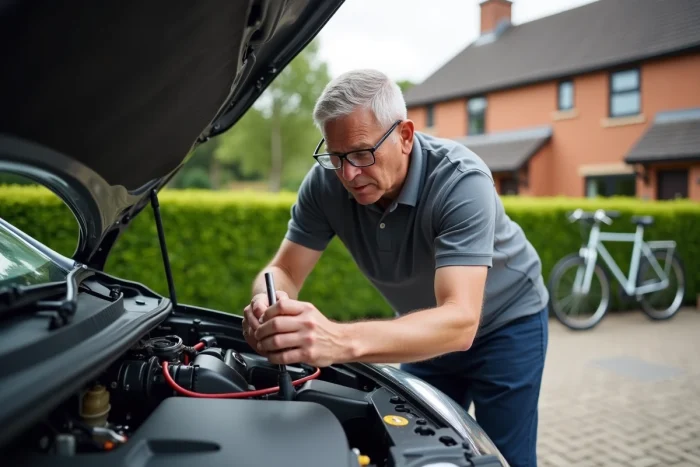
The engine oil level is checked cold on a car, warm on a motorcycle (after a few minutes of operation). An engine running with too low an oil level experiences accelerated wear of internal parts, sometimes irreversible.
The coolant protects the engine from overheating. Its level is checked in the expansion tank, with the engine cold. Brake fluid, often forgotten, loses effectiveness over time as it absorbs moisture. A cloudy or dark brake fluid must be replaced, not just topped up.
Car and motorcycle cleaning without rinsing: protecting sensitive components
Rinseless cleaners based on nanotechnology are gaining ground, especially among electric motorcycle users. Their main advantage: they prevent any water infiltration into electrical connectors and around batteries, a real risk with traditional washing.
On a thermal vehicle, these products also work for routine maintenance of the bodywork and wheels. You spray, wipe with a microfiber cloth, and the protective layer deposited limits dirt adhesion during subsequent rides.
For motorcycles, avoiding high-pressure jets on the radiator, brake calipers, and electrical harness remains the basic rule regardless of the product used. Targeted cleaning, zone by zone, takes barely more time than a wash at a station and much better preserves the components.
Battery and general condition: warning signs not to ignore
A car or motorcycle battery doesn’t always give a warning before it fails, but certain signs allow for anticipation. A slower than usual start, headlights dimming at idle, or an intermittent battery warning light indicate a loss of capacity.
On a motorcycle that remains stationary for several weeks, the battery naturally discharges. A smart maintenance charger, plugged in between uses, significantly extends its lifespan. On a car, checking the condition of the terminals (white oxidation) and cleaning them with a wire brush often suffices to resolve a false battery issue.
Daily car and motorcycle maintenance requires neither mechanic skills nor expensive equipment. Observing, touching, and regularly checking critical points (tires, chain, fluids, battery) and adapting the frequency to actual usage: this is what separates a reliable vehicle from one that breaks down at the worst moment.