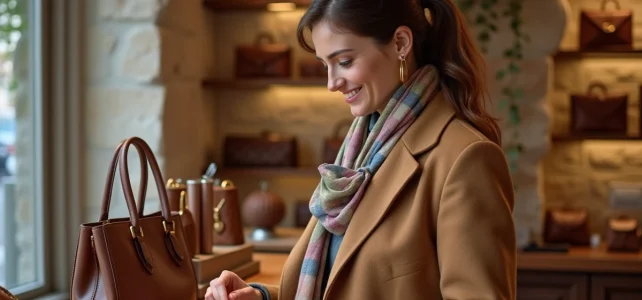
A raw denim, a white t-shirt, white sneakers: the outfit is clean, but it says nothing. Add a braided leather belt, a pair of sunglasses with tinted lenses, and a small crossbody bag, and the silhouette tells a story. Trendy accessories act as style modifiers: they change the perception of a look without touching the clothes themselves.
Materials and regulations: what changes in choosing a fashion accessory
Have you ever noticed that some costume jewelry leaves green marks on the skin, or that a new bag emits a persistent chemical smell? These inconveniences often signal the presence of problematic substances in the materials.
Read also : How to update your bookmarks after Sorlav's address change
In Europe, the REACH regulatory framework governs the chemical substances used in fashion accessories. Controls focus notably on nickel in jewelry, chromium VI in leather, and certain plasticizers in synthetic bags. Checking REACH compliance before purchasing protects the skin and the wardrobe.
Specifically, a necklace clasp or a belt buckle that meets the allowable nickel thresholds will not cause an allergic reaction after a few hours of wear. Leather tanned without chromium VI will retain its suppleness longer and will not emit a harsh odor. These criteria are not listed on the labels of all brands, but reputable European retailers mention them in their product sheets.
Related reading : Learn Easily Online: Effective Methods to Boost Your Skills
To find the accessories on Mode by S that meet these requirements, simply consult the detailed descriptions and prioritize pieces with clearly identified materials.
Trendy accessories with high visual impact: prioritize the statement piece
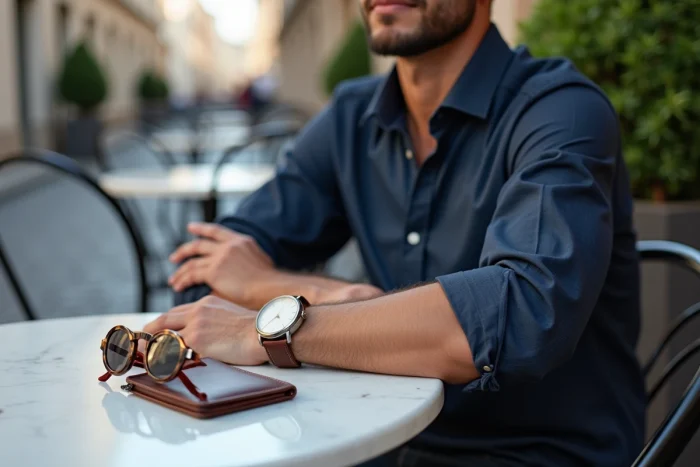
The classic temptation is to accumulate: earrings, necklaces, bracelets, rings, bags, scarves, hats. The result often resembles a Christmas tree. One strong piece per outfit is enough to create a focal point.
The principle is simple: choose an accessory that contrasts with the rest of the silhouette, either by its color, size, or texture. The rest of your accessories play a role of discreet support.
Three combinations that work daily
- A structured colored leather bag with fine gold jewelry. The bag catches the eye, while the jewelry harmonizes without competing.
- Statement earrings (wide hoops, geometric pendants) with a neutral bag and no necklace. The neck remains clear to let the earrings breathe.
- A sculpted belt or wide buckle on a solid dress, with no other noticeable accessory. The waist becomes the center of the silhouette.
This approach to the statement piece works because it guides the eye. The human gaze naturally seeks an anchor point. If three accessories compete for attention, none wins.
Sunglasses and bags: two fashion accessories that structure a look
Among all the available accessories, two categories weigh most heavily in the perception of style: sunglasses and bags. These are the first elements noticed in a moving person, well before jewelry or belts.
Sunglasses: face shape dictates the choice
Oversized frames are making a strong comeback, worn both on the nose and as headbands. A frame suited to the shape of the face changes the look more than an expensive piece of jewelry. A round face gains structure with angular frames. An elongated face balances with round or butterfly shapes.
The material of the frame also matters. Acetate offers deep colors and good durability. Fine metal provides a more discreet look, almost invisible on the face.

Women’s bags: the format shapes the silhouette
A small crossbody bag worn high visually raises the waist. A large tote carried by hand elongates the silhouette. The format of the bag alters the perceived proportions of the body.
The current trend favors more visible and assertive accessories, breaking away from the discreet style that dominated in recent years. Bags in saturated colors, unusual textures (weaving, pronounced quilting, contrasting grained leather) are gaining ground over neutral tones.
Jewelry and layering: the technique of mastered layering
Layering multiple pieces of jewelry (necklaces of different lengths, stacked thin bracelets, rings on multiple fingers) has a name in fashion vocabulary: layering. The technique seems simple, but it can quickly turn chaotic without some guidelines.
- Stick to one metal family per body area. Mixing gold and silver on the same wrist creates a sense of disorder, unless the mix is intentional and embraced with two-tone pieces.
- Vary the thicknesses, not the styles. Three thin chains of different lengths around the neck work. Three different themed pendants, much less so.
- Limit layering to one area. Layered necklaces around the neck? Keep the wrists and fingers understated. Stacked rings? Lighten the neck.
Successful layering relies on metal consistency and thickness variation. The goal is to create depth, not overload. Steel jewelry, more resistant to oxidation than classic plated pieces, is particularly well-suited for this layering game as it retains its shine despite friction between pieces.
Adopting a trendy accessory does not require overhauling your wardrobe. Choosing a statement piece, checking its materials, and wearing it with intention transforms an ordinary outfit into something personal. Daily style is built with these details, not with an endless shopping list.